
History projects often feel like memorizing dates and names. But when students build something with their hands, history suddenly becomes real. That’s exactly why projects based on the famous Mission San Juan Capistrano are so popular in classrooms.
Founded in 1776, this mission is one of California’s most iconic historical landmarks. It offers rich learning opportunities in architecture, culture, religion, and early colonial life. If you’re searching for san juan capistrano mission project ideas, this guide provides structured, meaningful, and creative options that go beyond basic models.
Let’s explore ideas that help students learn while actually enjoying the process.
Why Mission Projects Help Students Learn Better?
Hands-on projects improve understanding in ways textbooks cannot. Studies show that active learning increases retention rates significantly compared to passive reading.
Here’s why mission projects work so well:
- They connect history with creativity
- They encourage problem-solving and research skills
- They make learning interactive and memorable
- They allow students to visualize real historical structures
When students recreate a mission, they don’t just study history—they experience it.
How to Choose the Right Project?
Before picking from the list, consider a few important factors:
Grade Level
- Elementary: Simple models and drawings
- Middle school: Detailed structures and written explanations
- High school: Research-heavy or analytical projects
Materials Available
- Cardboard, clay, foam board, and recycled items work best
- Avoid overcomplicated materials that slow progress
Time Required
Choose a project that fits your timeline. Some ideas take a few hours, while others may need several days.
Now, let’s get to the main ideas.
You May Also Like: Kid Invention Ideas for School Project
20 San Juan Capistrano Mission Project Ideas
Below are 20 carefully designed project ideas, each explained in about 50 words for clarity and usability.
1. Mission Model Replica
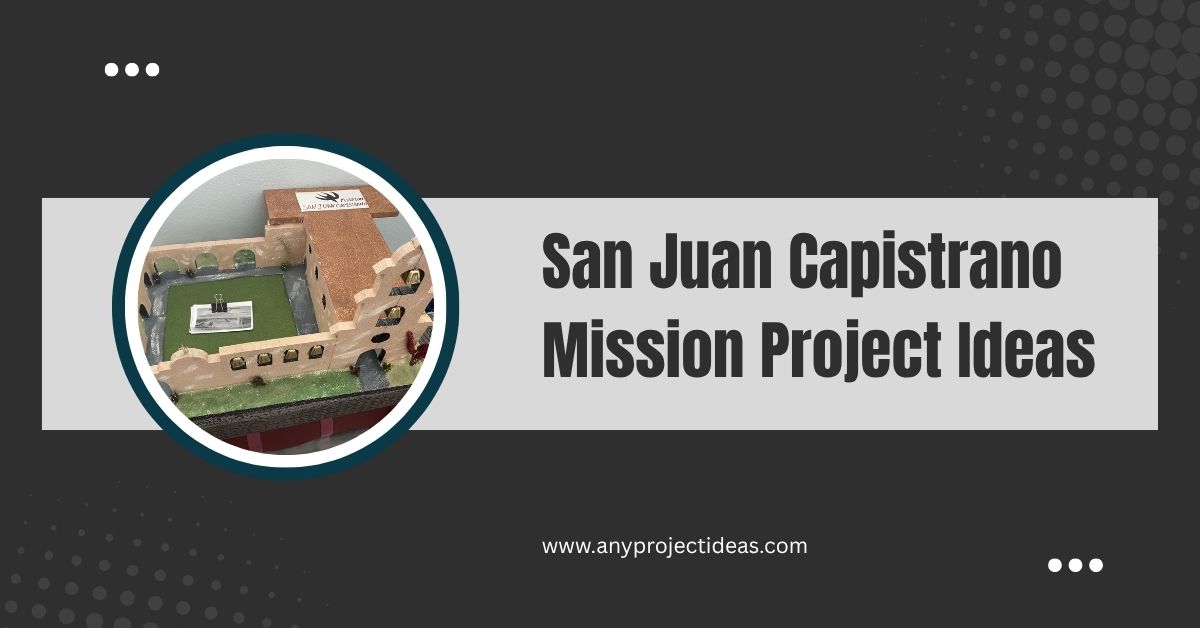
Create a detailed 3D model of the mission using cardboard, clay, or foam board. Focus on key structures like the church, courtyard, and bell tower. Add labels to explain each section. This project helps students understand the layout and architectural style of Spanish missions.
2. Timeline of the Mission
Design a visual timeline showing major events from the mission’s founding in 1776 to today. Include illustrations, dates, and short descriptions. This project improves chronological understanding and helps students connect historical events with real-world developments in California’s early history.
3. Adobe Brick Demonstration
Build small adobe bricks using clay or mud to demonstrate traditional construction methods. Explain how missionaries and Native Americans used these bricks to build durable structures. This project teaches historical building techniques and highlights the importance of natural materials in early architecture.
4. Mission Life Diorama
Create a diorama showing daily life inside the mission. Include figures representing missionaries, Native Americans, and workers. Show activities like cooking, farming, and praying. This project gives students insight into daily routines and cultural interactions within the mission community.
5. Swallow Migration Project
Research the famous swallows associated with the mission. Present their migration patterns and explain why they return annually. Use charts, drawings, or models. This project connects history with nature and highlights a unique tradition tied to the mission’s identity.
6. Mission Architecture Poster
Design a poster explaining architectural features such as arches, courtyards, and bell towers. Include labeled diagrams and brief descriptions. This project helps students understand Spanish colonial design and how architecture served both functional and religious purposes.
7. Map of California Missions
Create a map showing all 21 California missions, highlighting San Juan Capistrano. Include distances, locations, and brief facts. This project builds geographical awareness and helps students understand how missions were spaced along El Camino Real.
8. Daily Life Journal
Write a fictional journal from the perspective of someone living at the mission. Describe daily activities, challenges, and experiences. This project builds empathy and helps students understand historical life through storytelling.
9. Mission Farming Model
Build a model showing crops and farming methods used at the mission. Include irrigation systems and tools. Explain how farming supported the mission community. This project connects agriculture with survival and economic sustainability in early settlements.
10. Bell Tower Replica
Construct a model of the mission’s bell tower using simple materials. Explain the purpose of the bells, including communication and religious use. This project highlights the importance of sound and signaling in mission life.
11. Spanish Influence Presentation
Create a presentation explaining Spanish influence on culture, language, and religion. Use visuals and examples from the mission. This project helps students understand how Spanish colonization shaped California’s identity.
12. Mission Food Project
Research foods eaten at the mission and recreate simple recipes or display them visually. Explain ingredients and preparation methods. This project connects history with everyday life and makes learning more engaging.
13. Earthquake Damage Model
Show how the mission was damaged by earthquakes, especially in 1812. Build a before-and-after model to illustrate the impact. This project teaches natural disaster effects on historical structures.
14. Mission Restoration Project
Create a display showing how the mission has been restored over time. Include photos or drawings comparing past and present. This project highlights preservation efforts and the importance of maintaining historical landmarks.
15. Native American Culture Study
Research the Native American tribes connected to the mission. Present their traditions, lifestyle, and contributions. This project provides a balanced view of history and acknowledges indigenous perspectives.
16. Mission Garden Model
Build a small model of the mission garden with plants and irrigation systems. Explain how gardens supported daily life. This project combines science and history effectively.
17. Religious Practices Display
Create a display showing religious practices at the mission, including prayer and ceremonies. Use drawings or models. This project helps students understand the spiritual purpose of missions.
18. Mission Trade System
Explain how goods were produced and traded at the mission. Use charts or diagrams to show exchanges. This project introduces basic economic concepts within a historical context.
19. Interactive Mission Board
Design a board with moving parts or flaps that reveal facts about the mission. This interactive approach keeps viewers engaged and makes learning fun.
20. Digital Mission Presentation
Create a slideshow or video explaining the mission’s history, structure, and significance. Use images, narration, and animations. This project builds digital skills while presenting historical information effectively.
Tips to Make Your Project Stand Out
Even a simple idea can impress when executed well. Focus on clarity, creativity, and presentation.
- Use clean labeling and neat design
- Add real historical facts and dates
- Practice explaining your project confidently
- Include visual elements like colors and textures
- Keep your message simple and clear
Judges often value understanding more than complexity.
Common Mistakes to Avoid
Students often lose marks due to avoidable errors. Keep these in mind:
- Overloading the project with unnecessary details
- Ignoring historical accuracy
- Poor presentation or messy layout
- Lack of explanation or understanding
A well-explained simple project always beats a confusing complex one.
Don’t Miss: Write a Paragraph About 100 Words About Your Favourite Community Helper
Conclusion
Choosing the right san juan capistrano mission project ideas can turn a basic assignment into an engaging learning experience. These projects help students connect with history in a meaningful way while building creativity and confidence.
The goal isn’t perfection—it’s understanding. When students enjoy the process, they remember the lessons far longer.
Pick a project that fits your time, resources, and interest level. Then bring history to life, one idea at a time.