
Mathematics becomes much easier—and far more enjoyable—when you can see it in action. The Pythagorean Theorem is one of the most important concepts in geometry, yet many students struggle to connect it with real life.
That’s exactly where project-based learning helps.
In this guide on pythagorean theorem project ideas, you’ll discover 50+ creative, practical, and classroom-ready projects. Each idea comes with a short explanation so you can quickly understand and choose what fits your level.
Before we jump into the ideas, let’s quickly refresh the concept.
Understanding the Pythagorean Theorem in Simple Terms
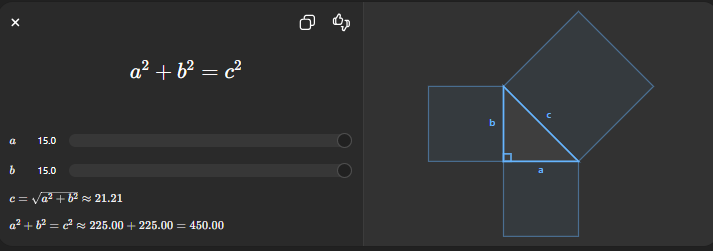
This formula applies to right-angled triangles. The square of the hypotenuse (longest side) equals the sum of squares of the other two sides.
In practical terms, it helps you calculate distances, heights, and diagonals. You’ll find it used in construction, navigation, engineering, and even video game design.
You May Also Like: What Types Of Jobs Would Require A 2-year Degree?
Why Project-Based Learning Works for This Concept?
Students often memorize formulas but forget them quickly. Projects solve this problem by turning abstract math into something visible and interactive.
Research shows that hands-on learning improves retention and understanding significantly. When students build, measure, and experiment, they actually “see” the theorem working.
Projects also help develop:
- Logical thinking
- Problem-solving skills
- Creativity
- Real-world application understanding
Now, let’s explore the ideas.
50+ Pythagorean Theorem Project Ideas
Basic Model and Visual Projects
- Draw a right triangle and shade squares on each side to show how areas relate visually.
- Create a colorful poster explaining the theorem with labeled sides and simple examples.
- Build a cardboard triangle model showing squares attached to each side.
- Use graph paper to demonstrate perfect square relationships clearly.
- Make a flipbook that shows step-by-step theorem calculation visually.
- Create a 3D foam model of a right triangle with raised square faces.
- Use colored tiles to represent squares of triangle sides for clarity.
- Build a paper folding activity showing area equivalence.
- Create a chalkboard demonstration using large-scale triangles.
- Design a math notebook page with diagrams and solved examples.
Real-Life Application Projects
- Measure a ladder leaning against a wall and calculate its length using the theorem.
- Calculate the diagonal of your classroom floor using actual measurements.
- Use the theorem to find the shortest walking path across a field.
- Measure TV or screen size diagonally and verify with calculations.
- Create a project on how builders use this theorem in construction.
- Measure heights using shadow lengths and apply the formula.
- Calculate distance between two points on a map using grid method.
- Build a mini bridge model and calculate support lengths.
- Demonstrate how surveyors measure land distances.
- Create a home-based measurement project using furniture dimensions.
Interactive and Working Models
- Build a rotating triangle model showing changing side lengths dynamically.
- Create a sliding square model that visually proves the theorem.
- Design a pegboard triangle demonstration with adjustable sides.
- Make a water displacement model showing equal areas visually.
- Use strings to form triangles and measure sides physically.
- Create a magnetic board with movable triangle pieces.
- Build a light projection model to display triangle shapes.
- Use a digital calculator demo with live input changes.
- Create a spinning wheel quiz based on theorem problems.
- Design a puzzle game where pieces fit using correct measurements.
Digital and Tech-Based Projects
- Create a PowerPoint explaining theorem with animations.
- Build a simple app that calculates hypotenuse instantly.
- Design an animated video explaining the concept step-by-step.
- Create a digital infographic with examples and diagrams.
- Use coding to simulate triangle calculations.
- Build an online quiz with instant feedback.
- Record a tutorial explaining real-life applications.
- Create a visual graph-based explanation using software.
- Design a math learning website page for this topic.
- Develop a mini game where users solve triangle problems.
Creative and Artistic Projects
- Design artwork using right triangles and geometric patterns.
- Create a mural showing real-life uses of the theorem.
- Make a comic strip explaining the theorem story.
- Use origami to form right triangles and measure sides.
- Create a geometric art piece using square patterns.
- Design a poster comparing wrong vs correct triangle calculations.
- Build a storytelling project where a character solves distance problems.
- Create a song or rhyme to remember the formula.
- Design a classroom wall display with interactive elements.
- Use painting to show squares merging into one larger square.
Advanced Concept and Exploration Projects
- Explore how the theorem applies in 3D geometry.
- Compare with distance formula in coordinate geometry.
- Study historical origins of the theorem.
- Create a proof-based project using rearrangement method.
- Explore how GPS systems use similar calculations.
How to Choose the Right Project?
Not every project suits every student. The best choice depends on your level, interest, and available time.
- Beginner students should focus on visual and simple models.
- Intermediate students can explore real-life applications.
- Advanced learners can try proofs, coding, or digital simulations.
Choose a project that helps you understand the concept, not just complete the assignment.
Tips to Make Your Project Stand Out
Focus on clarity
Explain the concept in simple terms so anyone can understand it.
Use accurate measurements
Precision builds trust and improves your project quality.
Add interaction
Projects with moving parts or questions engage viewers better.
Keep it neat
Presentation matters just as much as the idea.
Practice explaining
A confident explanation can make even a simple project impressive.
Common Mistakes Students Should Avoid
Students often lose marks due to avoidable errors.
Avoid:
- Incorrect labeling of triangle sides
- Using non-right triangles
- Poor measurements
- Lack of explanation
- Overcomplicating simple ideas
A clean, accurate, and well-explained project always performs better.
Don’t Miss: When Will You Feel The Effects Of Engine Braking?
Final Thoughts
These pythagorean theorem project ideas prove that math does not have to feel abstract or difficult. With the right approach, even a simple formula can turn into an engaging and practical learning experience.
Whether you build a model, create a digital tool, or explore real-life applications, the goal remains the same—understand the concept deeply.
Pick an idea that excites you, keep it simple, and focus on clarity. That’s how you turn a math project into something truly impressive.
Frequently Asked Questions
What are the best Pythagorean Theorem project ideas for students?
Popular Pythagorean Theorem projects include triangle models, real-life measurement activities, interactive demonstrations, digital simulations, and creative geometry artwork.
Why are Pythagorean Theorem projects important in learning geometry?
These projects help students visualize mathematical concepts, improve problem-solving skills, and understand how the theorem applies to real-world situations and measurements.
How can students apply the Pythagorean Theorem in real life?
Students can use the theorem to calculate distances, heights, diagonals, ladder lengths, map measurements, and construction-related dimensions accurately.
What makes a successful Pythagorean Theorem project?
A successful project includes accurate measurements, clear explanations, proper labeling of triangle sides, neat presentation, and practical application of the theorem.
What mistakes should students avoid in Pythagorean Theorem projects?
Avoid using non-right triangles, incorrect side labeling, poor calculations, unclear explanations, and overly complex designs that make the concept harder to understand.