
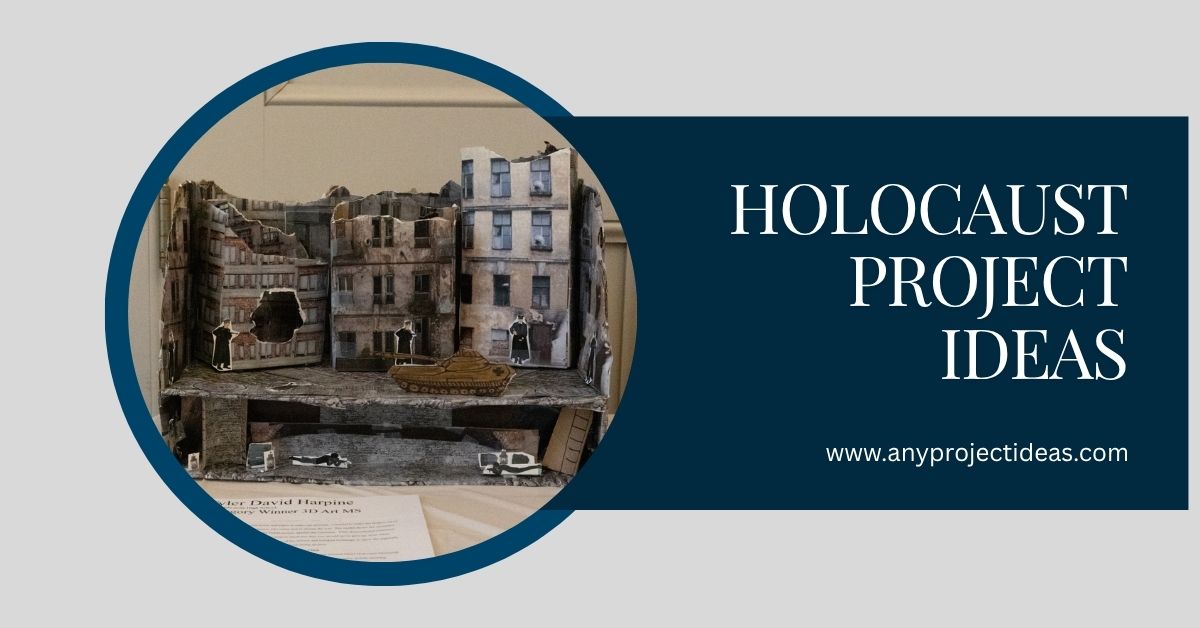
Studying the Holocaust is not just about learning history—it’s about understanding human behavior, ethics, and the consequences of hatred and discrimination. A well-chosen project can help students engage deeply with the subject while building critical thinking and empathy.
In this guide, you’ll find 50 Holocaust project ideas, each explained briefly to help you understand how to approach them effectively. Whether you’re preparing for a school assignment or a detailed research project, these ideas focus on historical accuracy, sensitivity, and meaningful learning.
Why Holocaust Projects Require Thoughtful Approach?
The Holocaust was one of the darkest periods in human history, resulting in the systematic murder of approximately six million Jews during World War II, along with millions of other victims.
Because of this, projects should:
- Be fact-based and respectful
- Focus on education and awareness, not sensationalism
- Highlight human stories and lessons learned
- Encourage critical thinking about ethics and society
A thoughtful project doesn’t just present information—it helps others understand why this history still matters today.
How to Choose the Right Holocaust Topic?
Before selecting a topic, consider these key points:
Focus on Learning, Not Just Presentation
Your goal is to understand and explain, not just display.
Choose a Specific Angle
Broad topics can feel overwhelming. Narrow down your focus.
Use Reliable Sources
Historical accuracy is essential in Holocaust studies.
Stay Respectful
Avoid dramatization that may trivialize real experiences.
You Might Also Like: PG Level Project Topics
50 Holocaust Project Ideas
Historical Events & Timeline Projects
1. Timeline of Holocaust Events
Create a detailed timeline from 1933 to 1945, highlighting major events and turning points.
This helps viewers understand how events escalated over time.
2. Rise of Nazi Germany
Explore how the Nazi party gained power in Germany.
Focus on political, economic, and social factors.
3. Nuremberg Laws Analysis
Explain the laws that stripped Jews of rights.
Show how legal systems were used to enforce discrimination.
4. Kristallnacht Study
Analyze the events of the Night of Broken Glass.
Discuss its impact on Jewish communities.
5. Role of Propaganda
Examine how propaganda influenced public opinion.
Include examples of posters, media, and speeches.
6. Ghettos in Europe
Study the conditions in Jewish ghettos.
Focus on daily life and survival challenges.
7. Concentration Camps Overview
Explain the purpose and conditions of camps.
Include maps and historical data.
8. Liberation of Camps
Explore how Allied forces discovered and liberated camps.
Discuss global reactions.
9. Final Solution Explained
Describe the Nazi plan for genocide.
Present facts carefully and respectfully.
10. End of World War II and Holocaust
Connect the end of the war with Holocaust outcomes.
Explain what happened after liberation.
Personal Stories & Biographies
11. Anne Frank’s Life
Study the life of Anne Frank through her diary.
Highlight personal experiences during hiding.
12. Survivor Testimonies
Analyze real survivor stories.
Focus on resilience and memory.
13. Children in the Holocaust
Explore the experiences of children.
Discuss survival and loss.
14. Oskar Schindler’s Role
Study how Schindler saved lives.
Highlight moral courage.
15. Stories of Resistance
Research individuals who resisted Nazi control.
Explain different forms of resistance.
16. Holocaust Diaries
Analyze diary entries from victims.
Focus on emotions and daily struggles.
17. Stories of Righteous Among the Nations
Highlight people who helped Jews escape.
Discuss risks they took.
18. Family Separation Stories
Explore how families were separated.
Focus on emotional impact.
19. Survivor Interviews
Create a project based on recorded interviews.
Analyze key themes.
20. Personal Letters from the Holocaust
Study letters written during the period.
Explain their historical significance.
Social & Cultural Impact Projects
21. Impact on Jewish Culture
Explore how the Holocaust affected traditions and communities.
Discuss long-term consequences.
22. Holocaust and Human Rights
Connect the Holocaust to modern human rights laws.
Explain global responses.
23. Role of Bystanders
Analyze why many people did not act.
Discuss ethical responsibility.
24. Gender Roles During Holocaust
Study how experiences differed by gender.
Highlight unique challenges.
25. Education After the Holocaust
Explore how the event is taught today.
Discuss its importance in schools.
26. Holocaust Denial
Explain what denial is and why it is dangerous.
Focus on the importance of truth.
27. Media Representation
Analyze films and books about the Holocaust.
Discuss accuracy and impact.
28. Impact on Europe
Study how European societies changed.
Focus on political and social shifts.
29. Refugee Crisis During WWII
Explore displacement of people.
Compare with modern refugee issues.
30. Memory and Memorials
Study Holocaust memorials worldwide.
Explain their purpose.
Ethical & Philosophical Projects
31. Moral Choices During the Holocaust
Analyze decisions made by individuals.
Discuss right vs wrong in extreme situations.
32. Role of Obedience
Study how authority influenced behavior.
Connect with psychology theories.
33. Responsibility of Citizens
Discuss what ordinary people could have done.
Encourage critical thinking.
34. Justice After the Holocaust
Explore war crime trials.
Explain accountability.
35. Ethics of Survival
Discuss difficult survival decisions.
Focus on human dilemmas.
36. Role of Fear
Analyze how fear influenced actions.
Explain psychological impact.
37. Leadership and Power
Study how leadership shaped events.
Discuss misuse of power.
38. Importance of Tolerance
Connect Holocaust lessons to modern society.
Promote awareness.
39. Consequences of Hate
Explain how hate leads to violence.
Use historical examples.
40. Lessons for Future Generations
Highlight key takeaways from history.
Focus on prevention.
Creative & Presentation-Based Projects
41. Documentary Video Project
Create a short documentary using research and visuals.
Focus on storytelling and facts.
42. Holocaust Museum Model
Design a model museum exhibit.
Include sections on different topics.
43. Digital Timeline Project
Build an interactive timeline online.
Use visuals and brief descriptions.
44. Photo Essay
Collect and explain historical images.
Provide context for each.
45. Storytelling Presentation
Narrate a personal story from history.
Use visuals and voice.
46. Poster Awareness Campaign
Design posters to spread awareness.
Focus on key messages.
47. Interactive Map Project
Show locations of major events.
Explain their significance.
48. Role-Play Presentation
Present historical scenarios respectfully.
Focus on understanding perspectives.
49. Infographic Project
Summarize key facts visually.
Use charts and data.
50. Educational Website
Create a simple website about the Holocaust.
Include sections and resources.
How to Make Your Holocaust Project Stand Out?
Focus on Accuracy
Always verify your sources.
Keep It Respectful
Avoid dramatization or exaggeration.
Use Visuals Carefully
Images should support learning, not shock value.
Explain Clearly
Make your project easy to understand.
Common Mistakes to Avoid
- Using unreliable sources
- Oversimplifying complex history
- Ignoring emotional sensitivity
- Focusing only on visuals without explanation
A strong project balances facts, clarity, and respect.
Don’t Miss: Shark Tank Product Ideas
Final Thoughts
The Holocaust is not just a topic—it’s a powerful reminder of what can happen when hatred and intolerance go unchecked.
These Holocaust project ideas are designed to help you explore history thoughtfully and meaningfully. Choose a topic that resonates with you, research it deeply, and present it with care.
Because the goal is not just to complete a project—but to understand, remember, and educate others.