
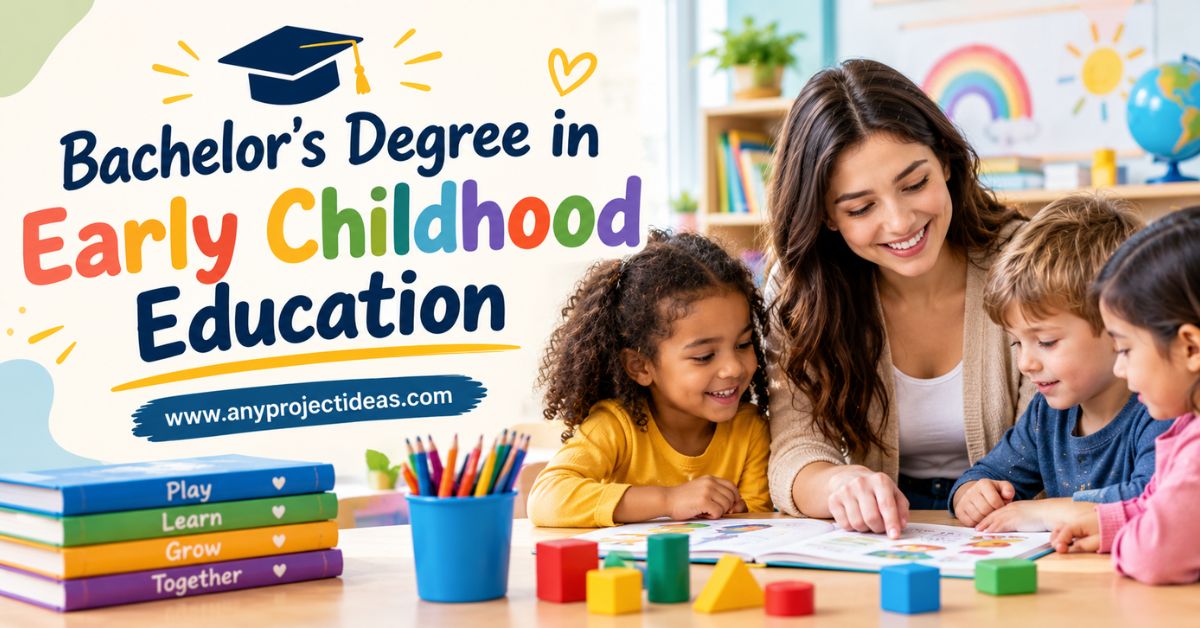
Choosing a career that allows you to make a lasting difference in a child’s life can be deeply rewarding. A bachelor’s degree in early childhood education can prepare students for careers focused on the learning, development, and well-being of young children. It combines education theory with practical teaching skills, child development knowledge, classroom strategies, and professional preparation.
Early childhood is a critical period of development. During the first years of life, children build language skills, social abilities, emotional awareness, motor skills, and early academic foundations. Educators who understand these developmental stages can create learning environments where children feel safe, supported, and encouraged to explore.
If you are considering this degree, you may have questions about what you will study, how long the program takes, what careers it can lead to, and whether it is the right choice for you. This guide explains the bachelor’s degree in early childhood education in simple terms and explores the skills, coursework, career opportunities, benefits, and important factors to consider before enrolling.
What Is a Bachelor’s Degree in Early Childhood Education?
A bachelor’s degree in early childhood education is an undergraduate program designed to prepare students to work with young children, typically from infancy through the early elementary years. The exact age range depends on the institution, program, and local education requirements.
The degree combines academic study with practical preparation. Students learn how children grow and learn while also developing strategies for planning lessons, managing classrooms, communicating with families, and supporting different learning needs.
Unlike a program focused only on general education, early childhood education places strong emphasis on developmental stages and age-appropriate learning. Students learn that teaching a preschooler requires different approaches from teaching an older elementary student.
What Do Early Childhood Education Students Learn?
Course requirements vary by college, but many programs cover areas such as:
- Child growth and development
- Early childhood curriculum
- Educational psychology
- Classroom management
- Language and literacy development
- Early mathematics
- Children’s literature
- Social and emotional development
- Inclusive education
- Family and community relationships
- Assessment and observation
- Teaching methods
- Educational technology
- Professional ethics
- Student teaching or field experience
The combination helps future educators connect educational theory with real classroom situations.
You May Also Like: Why Kids Should Have Less Homework?
Why Is Early Childhood Education Important?
Young children learn through a combination of structured activities, play, social interaction, exploration, and everyday experiences. A skilled early childhood educator understands how to turn these experiences into meaningful learning opportunities.
For example, a simple activity such as building with blocks can encourage children to explore shapes, balance, measurement, planning, cooperation, and problem-solving. A storybook can support vocabulary while also helping children understand emotions and relationships.
Early childhood educators therefore do much more than teach letters and numbers. They help children develop the foundations they will use throughout their education.
Supporting Different Areas of Development
A strong early childhood program considers several areas of development.
Cognitive development: Children develop memory, reasoning, attention, problem-solving, and early academic skills.
Language development: Children learn to communicate ideas, understand language, build vocabulary, and develop early literacy.
Social development: Children learn how to interact with classmates, cooperate, share, and participate in group activities.
Emotional development: Children gradually learn to identify feelings, manage emotions, build confidence, and develop relationships.
Physical development: Activities can support coordination, movement, fine motor skills, and physical independence.
An early childhood education degree helps future teachers understand how these areas influence one another.
What Courses Are Included in a Bachelor’s Degree in Early Childhood Education?
The exact curriculum depends on the college, but students usually complete a mixture of general education, education courses, specialized early childhood courses, and practical training.
Child Development Courses
Child development courses introduce students to physical, cognitive, language, social, and emotional development. Students examine how children change as they grow and how different experiences can influence development.
This knowledge helps educators set realistic expectations. A teacher who understands developmental differences is better prepared to recognize that children may reach milestones at different times.
Curriculum and Teaching Methods
These courses focus on how to design learning experiences for young children. Students may learn how to create lesson plans, select age-appropriate activities, organize classroom materials, and adapt instruction for different learners.
For example, a lesson about plants could include reading a picture book, examining real leaves, planting seeds, drawing observations, and discussing what plants need to grow.
Classroom Management
Managing a classroom of young children requires patience, consistency, communication, and planning. Students learn strategies for establishing routines, encouraging positive behavior, resolving conflicts, and creating a safe learning environment.
Effective classroom management is not simply about controlling behavior. It is also about creating predictable routines that help children understand what is expected of them.
Assessment and Observation
Early childhood educators often observe children during activities to understand their progress and identify areas where additional support may help.
Students may learn how to document observations, evaluate learning activities, and use information to adjust instruction.
Practical Experience in Early Childhood Education Programs
One of the most valuable parts of many bachelor’s programs is practical experience. Depending on the program and location, this may involve classroom observations, internships, practicums, or student teaching.
Practical experience allows students to see how educational concepts work in real settings.
For example, a student may learn about positive behavior support in a college course and later observe how an experienced teacher uses classroom routines, visual schedules, and encouragement with young children.
Why Field Experience Matters
Working directly with children can help students understand the realities of the profession. Classroom experience can also reveal personal strengths and areas that need improvement.
Students may discover that they enjoy designing creative activities but need more practice managing transitions between activities. This type of feedback can be extremely valuable before entering the profession.
Skills You Can Develop With This Degree
A bachelor’s degree in early childhood education can help students develop both education-specific and transferable skills.
Communication Skills
Early childhood educators communicate with children, parents, caregivers, coworkers, administrators, and other professionals. Clear communication is essential.
Teachers need to explain concepts in language young children can understand while also communicating children’s progress and needs to adults.
Planning and Organization
Teachers often plan activities, prepare materials, organize classroom spaces, document observations, and manage schedules.
Strong organizational skills can make busy school days easier to manage.
Creativity
Young children often respond well to hands-on and imaginative learning experiences. Teachers may use storytelling, music, art, games, movement, experiments, and dramatic play to introduce concepts.
Creativity allows educators to present the same idea in different ways.
Patience and Adaptability
Children do not always respond to activities exactly as planned. An educator may need to change an activity because students are confused, distracted, excited, or ready for a greater challenge.
The ability to adapt is therefore an important professional skill.
Career Opportunities With a Bachelor’s Degree in Early Childhood Education
Career options depend heavily on the degree program, employer, and licensing requirements in the region where you want to work. Some positions may require additional certification or qualifications.
Potential career paths can include:
- Preschool teacher
- Pre-K teacher
- Kindergarten teacher, where eligible
- Early childhood program coordinator
- Childcare center educator
- Early learning specialist
- Family support professional
- Curriculum assistant
- Education program coordinator
- Child development program staff member
Some graduates may also pursue additional education to qualify for specialized teaching, administrative, counseling, or education-related roles.
Preschool Teacher
Preschool teachers work with young children before they enter formal elementary education. Their responsibilities may include planning activities, supporting social development, introducing early academic concepts, communicating with families, and maintaining a safe classroom.
Early Childhood Program Coordinator
Program coordinators may help organize educational programs, support staff, communicate with families, and contribute to curriculum planning.
This role may require experience beyond an undergraduate degree, depending on the employer.
Kindergarten Teacher
In some education systems, a bachelor’s degree can form part of the pathway toward becoming a kindergarten teacher. However, teacher certification and licensing requirements vary by location, so prospective students should check the requirements where they plan to work.
Benefits of Earning This Degree
A bachelor’s degree can provide several benefits for people who want a long-term career in education.
A Strong Foundation in Child Development
Students gain a structured understanding of how young children develop and learn. This foundation can influence how they plan activities and respond to individual needs.
More Career Options
Compared with having only entry-level training, a bachelor’s degree may qualify graduates for a broader range of education-related positions, depending on local requirements.
Preparation for Further Education
Some graduates continue into master’s programs or specialized training in areas such as educational leadership, special education, curriculum development, or child development.
Meaningful Work
Working with young children can be personally rewarding. Educators have opportunities to support children’s confidence, curiosity, communication, and early academic development.
Is a Bachelor’s Degree in Early Childhood Education Right for You?
The degree may be a good fit if you enjoy working with children and are interested in how they learn and develop. However, enjoying children alone is not enough. Early childhood education requires patience, planning, communication, responsibility, and emotional awareness.
Before enrolling, consider the following questions:
- Do I enjoy explaining ideas in simple ways?
- Am I comfortable working with young children?
- Can I remain patient when situations become challenging?
- Do I enjoy creative activities?
- Am I interested in child development?
- Am I comfortable communicating with families?
- Do I want a career in education or child development?
Answering these questions honestly can help you determine whether the field matches your interests and strengths.
How to Choose an Early Childhood Education Program?
Not every program has the same curriculum or professional outcomes. Before applying, compare several important factors.
Check Accreditation and Recognition
Look for programs that are appropriately accredited or recognized by the relevant educational authorities. Accreditation requirements differ by country and institution.
Review Certification Requirements
If your goal is to become a licensed teacher, check whether the program meets the requirements for teacher certification in the location where you intend to work.
A degree title alone does not necessarily guarantee eligibility for a teaching license.
Examine Practical Training
Find out how much classroom experience the program provides. A strong practical component can help students connect theory with real teaching situations.
Compare Program Costs
Consider tuition, books, transportation, technology, placement expenses, and other costs. Also investigate scholarships, grants, and financial aid for which you may qualify.
Look at Course Content
Read the curriculum carefully. Compare courses in child development, teaching methods, literacy, mathematics, assessment, inclusion, and classroom management.
Challenges to Consider
Early childhood education can be rewarding, but it also comes with challenges. Teachers may manage busy classrooms, communicate with families, document children’s progress, and adapt activities for different needs.
The emotional demands can also be significant. Young children are still developing self-regulation and communication skills, so educators need patience and consistency.
Understanding these realities before entering the field can help students make an informed career decision.
Also read: Do You Need To Have A Technical AI Background In Order To Start A Generative AI Venture?
Conclusion
A bachelor’s degree in early childhood education can provide a strong foundation for people who want to work with young children and support their early development. The program combines knowledge of child development with practical teaching strategies, classroom experience, communication skills, and curriculum planning.
The field offers opportunities to influence children’s early learning experiences at a time when they are developing important cognitive, social, emotional, language, and physical skills. However, prospective students should carefully research program accreditation, practical training, certification requirements, costs, and career pathways before enrolling.
If you enjoy helping children learn, solving everyday classroom challenges, creating engaging activities, and building supportive relationships, early childhood education may offer a meaningful professional path. The right program can give you the knowledge and practical experience needed to begin that journey with greater confidence.
Frequently Asked Questions (FAQ)
What can you do with a bachelor’s degree in early childhood education?
Graduates may pursue roles such as preschool teacher, early learning educator, program coordinator, or other child development positions, depending on local requirements.
How long does a bachelor’s degree in early childhood education take?
A bachelor’s program commonly takes about four years of full-time study, although completion time varies by institution, course load, transfer credits, and program structure.
Is early childhood education a good career choice?
It can suit people who enjoy supporting young children and want education-focused work. Career requirements, salaries, and opportunities vary by location and employer.
Does an early childhood education degree require student teaching?
Many teacher preparation programs include supervised field experience, practicum, or student teaching. Requirements vary, so check the program curriculum carefully.
What subjects do you study in early childhood education?
Common subjects include child development, curriculum planning, teaching methods, literacy, mathematics, classroom management, assessment, inclusion, and family engagement.
1 thought on “Bachelor’s Degree in Early Childhood Education: Benefits & Careers”