
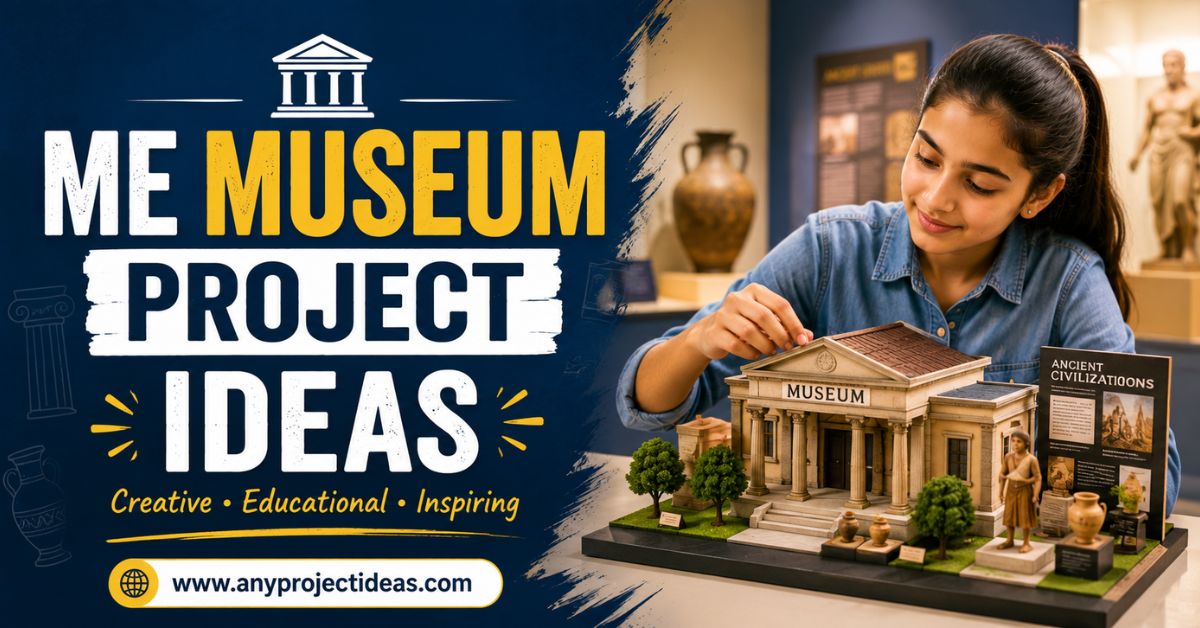
Looking for Me Museum project ideas that are creative, meaningful, and easy to turn into an impressive school project? A Me Museum is a personal collection that tells the story of who you are. Instead of displaying famous historical objects or scientific specimens, you create a mini museum filled with items, pictures, drawings, memories, and explanations that represent your personality, family, interests, experiences, and goals.
This type of project gives students a chance to look at their own lives from a different perspective. A favorite toy can represent childhood, a photograph can capture an important memory, and a medal can tell a story about hard work. Even an ordinary object, such as a school notebook or bus ticket, can become interesting when you explain why it matters to you.
The best Me Museum projects are not simply collections of random personal belongings. Each item should have a purpose and a short story behind it. The goal is to help visitors understand something about you through the objects you choose. This makes the project both a creative display and a personal storytelling activity.
Whether you need ideas for an elementary school assignment, middle school project, family-history activity, or classroom presentation, this guide provides more than 55 ideas to help you create a memorable Me Museum.
What Is a Me Museum Project?
A Me Museum is a student-created display that represents important parts of the student’s life and identity. It can be presented as a physical museum box, poster board, tabletop exhibition, decorated folder, digital presentation, or classroom display.
Each item acts like a museum exhibit. Students can add a title, description, date, and short explanation of why the object is meaningful.
For example, a student might display:
- A childhood photograph
- A favorite book
- A sports medal
- A family recipe
- A drawing
- A souvenir from a trip
- A certificate
- A favorite toy
- A handmade craft
- A future career drawing
The important part is the explanation. Visitors should be able to understand what each object says about the student.
How to Choose Items for Your Me Museum?
Before collecting objects, think about the different parts of your life you want to represent. You do not need to include expensive or unusual things. Personal meaning matters much more than monetary value.
Think About Your Story
Ask yourself:
- What memories are especially important to me?
- What activities do I enjoy?
- Who has influenced me?
- What achievements am I proud of?
- What places are important to me?
- What are my goals for the future?
Your answers can lead you to objects that tell a much stronger story.
Choose Variety
A museum becomes more interesting when the exhibits are different from one another. Instead of displaying ten photographs, combine photographs with objects, drawings, written memories, and creative representations.
You May Also Like: Why Should You Place Your Hands On The Steering Wheel While Officer Is Approaching?
60 Me Museum Project Ideas
Here are 60 creative ideas you can use as individual exhibits or combine into one complete museum.
Childhood and Memory-Based Ideas
1. Favorite Childhood Toy
Display a toy that was important during your early years. Explain when you received it, how you played with it, and why you still remember it.
2. Baby Photograph
Include a favorite baby picture and write a short caption describing what your family remembers about that time.
3. Childhood Drawing
Display an old drawing or recreate one from memory. Explain what you liked to draw when you were younger.
4. First School Memory
Create an exhibit about your first day of school. You can include a photograph, drawing, school item, or written memory.
5. Favorite Childhood Book
Display a book you loved as a child and explain what made the story memorable.
6. Old School Uniform
If available, display an old uniform or photograph and explain how your school life has changed.
7. Childhood Birthday Memory
Create a small display about a memorable birthday, including a photograph, invitation, card, or handmade decoration.
8. First Friendship
Tell the story of an early friendship and explain what you learned from that relationship.
9. Childhood Game
Display an object connected with a favorite game or recreate the game using drawings and labels.
10. Special Family Memory
Choose a family event that you remember clearly and explain why it remains meaningful.
Family and Heritage Ideas
Family history can add depth to a Me Museum because it shows where some of your traditions, values, and interests come from.
11. Family Photograph
Choose a photograph that includes several generations and explain who the people are.
12. Family Recipe
Display a favorite family recipe and explain who usually prepares it and why it matters.
13. Traditional Clothing
Show a photograph or drawing of clothing connected to your family’s traditions.
14. Family Heirloom
If your family has an object passed down through generations, explain its history.
15. Family Tree
Create a simple family tree and highlight a few interesting facts about relatives.
16. Important Family Tradition
Describe a tradition your family follows every year.
17. Family Celebration
Create an exhibit about a festival, holiday, birthday, or gathering your family enjoys.
18. Family Story
Write a short story about an event that older family members have shared with you.
19. Family Hobby
Show something connected with a hobby shared by members of your family.
20. Family Photograph Timeline
Arrange family photographs chronologically to show how your family has changed over time.
School and Achievement Ideas
School experiences often provide some of the easiest and most meaningful Me Museum exhibits.
21. Favorite School Subject
Create an exhibit explaining why you enjoy a particular subject and what you have learned from it.
22. School Project
Display a previous project that you are particularly proud of.
23. Academic Certificate
Include a certificate or award and explain what you did to earn it.
24. Favorite Teacher Memory
Write about a teacher who helped you learn something important.
25. School Notebook
Display an old notebook and explain how it represents your academic journey.
26. First School Award
Share the story behind your first award or recognition.
27. Class Photograph
Include a class photo and identify an important memory connected with it.
28. Favorite School Activity
Show something connected with an activity you enjoy at school.
29. School Field Trip
Use photographs, tickets, drawings, or notes from a memorable school trip.
30. Learning Milestone
Create an exhibit about something you once found difficult but eventually learned.
Hobbies and Interests
Your hobbies can reveal a lot about your personality, making them excellent museum exhibits.
31. Favorite Sport
Display a ball, photograph, jersey, medal, or drawing related to your favorite sport.
32. Music Collection
Show an instrument, music sheet, photograph, or other item connected to music you enjoy.
33. Art Hobby
Display one of your drawings, paintings, crafts, or designs.
34. Photography
Create a small collection of photographs that represents your interests.
35. Reading Collection
Choose a few favorite books and explain what each one taught you.
36. Cooking
Display a recipe, photograph, utensil, or drawing related to your favorite dish.
37. Gardening
Show photographs of plants you have grown or a small gardening tool.
38. Gaming
Explain how a favorite game has influenced your interests or taught you skills such as strategy and teamwork.
39. Collecting
Display a small collection of objects such as stamps, coins, cards, shells, or stickers.
40. Building and Making
Show a model, craft, LEGO creation, or other object you built yourself.
Travel and Special Experiences
Travel does not have to mean visiting another country. A family day trip or local outing can also become a meaningful exhibit.
41. Favorite Travel Destination
Display photographs or drawings from a memorable destination.
42. Travel Souvenir
Choose a small souvenir and explain where it came from and why you kept it.
43. Memorable Trip
Create a timeline showing the most important moments from a trip.
44. Favorite Place
Show a photograph or drawing of a place where you feel happy or comfortable.
45. Map of Important Places
Create a map marking places that have played an important role in your life.
46. First Big Adventure
Describe an experience that pushed you outside your comfort zone.
47. Nature Experience
Show photographs or drawings from a memorable outdoor experience.
48. Cultural Experience
Describe an event or experience that helped you learn about another culture or tradition.
Personality and Future Goals
These ideas make your Me Museum more reflective because they focus on who you are becoming.
49. My Personality
Create an exhibit using words, pictures, and symbols that describe your personality.
50. My Strengths
Choose three or four personal strengths and provide examples of when you have used them.
51. My Biggest Achievement
Explain an accomplishment that required effort, patience, or determination.
52. Something I Overcame
Describe a challenge you faced and what you learned from the experience.
53. My Role Model
Display a photograph or drawing of someone who inspires you and explain why.
54. My Dream Career
Create a display showing the career you would like to pursue and why it interests you.
55. My Future Self
Draw or design a picture showing what you imagine your life might look like in the future.
56. My Bucket List
Create a list of experiences you would like to have someday.
57. Skills I Want to Learn
Display five skills you would like to develop and explain why each one interests you.
58. Personal Motto
Choose a quote or phrase that represents how you try to live and explain its meaning.
59. My Goals
Create short-term and long-term goals using photographs, drawings, or written statements.
60. Letter to My Future Self
Write a letter describing who you are today, what matters to you, and what you hope your future self remembers.
How to Organize Your Me Museum
Once you have selected your exhibits, organize them so visitors can understand your story easily. A good museum should have a clear beginning, middle, and ending.
Start with a simple title such as “The Museum of Me.” Then arrange exhibits into sections such as childhood, family, school, hobbies, achievements, and future goals.
Give Every Exhibit a Label
Each item can include four simple pieces of information:
Exhibit name: What is the object?
Date: When did it become important?
Story: What happened?
Why it matters: What does it say about you?
For example:
Exhibit: My First Cricket Bat
Date: 2019
Story: My uncle gave me this bat when I joined my first cricket team.
Why it matters: It represents my love of sports and taught me the importance of practice.
This format keeps explanations short while giving every object a purpose.
Creative Ways to Present a Me Museum
Museum Box
A decorated cardboard box can become a miniature museum. Divide the inside into sections and add small exhibits.
Poster Board Museum
Use a large board with photographs, drawings, captions, and objects attached to different sections.
Shoebox Museum
A shoebox is an inexpensive option for younger students. It can become a small exhibition space with miniature displays.
Digital Me Museum
Older students can create a digital museum using slides. Each slide can represent one exhibit and include photographs, descriptions, and captions.
Interactive Museum
Add QR codes, recorded explanations, or short audio descriptions if your teacher allows technology. Visitors can scan an exhibit and hear the student explain its story.
Tips for Making Your Project Stand Out
A strong Me Museum does not need expensive decorations. Meaningful content and thoughtful organization matter more.
Tell Stories Instead of Listing Facts
Instead of writing, “This is my medal,” explain how you earned it, what challenge you faced, and why the achievement matters.
Protect Personal Information
You do not need to include private family details, home addresses, financial information, or anything that makes you uncomfortable sharing. Choose memories that are meaningful but appropriate for a classroom audience.
Use Copies Instead of Valuable Items
If an object is fragile, expensive, or sentimental, use a photograph or drawing instead. A museum display should not put valuable belongings at risk.campaign that students forget after a week.
Don’t Skip: Explain How Experiencing Different Learning Activities Can Help Learners Identify Their Strengths
Conclusion
A Me Museum project is a creative way to turn everyday memories and personal experiences into a meaningful educational display. The most effective projects do not depend on expensive materials or rare objects. A childhood toy, favorite book, school certificate, family photograph, hobby item, or handwritten letter can become an interesting exhibit when you explain the story behind it.
The 55+ Me Museum project ideas in this guide can help you explore different parts of your life, from childhood memories and family traditions to school achievements, hobbies, personal strengths, and future dreams. Choose objects that genuinely represent you rather than simply selecting things that look impressive.
Remember, the purpose of a Me Museum is to help others learn about the person behind the exhibits. Give each item a clear explanation, organize your display thoughtfully, and add your own creativity. Your museum does not have to be perfect. It simply needs to tell your story in a way that feels authentic to you.
FAQs
Frequently Asked Questions (FAQ)
1. What is a Me Museum project?
A Me Museum is a personal school display containing objects, photos, drawings, and stories that represent a student’s memories, interests, achievements, family, and goals.
What should I put in my Me Museum?
Include meaningful items such as childhood toys, photographs, books, awards, hobbies, family memories, school projects, souvenirs, and objects linked to future goals.
How many items should a Me Museum have?
There is no fixed number, but choosing around 8 to 15 meaningful exhibits can create a detailed display without making the project too crowded.
Can I make a digital Me Museum?
Yes. You can create a digital version using presentation slides, photographs, captions, drawings, audio, or other approved multimedia elements.
How can I make my Me Museum project interesting?
Choose meaningful objects, explain the stories behind them, organize exhibits into clear sections, and use creative labels, drawings, photographs, or interactive elements.