
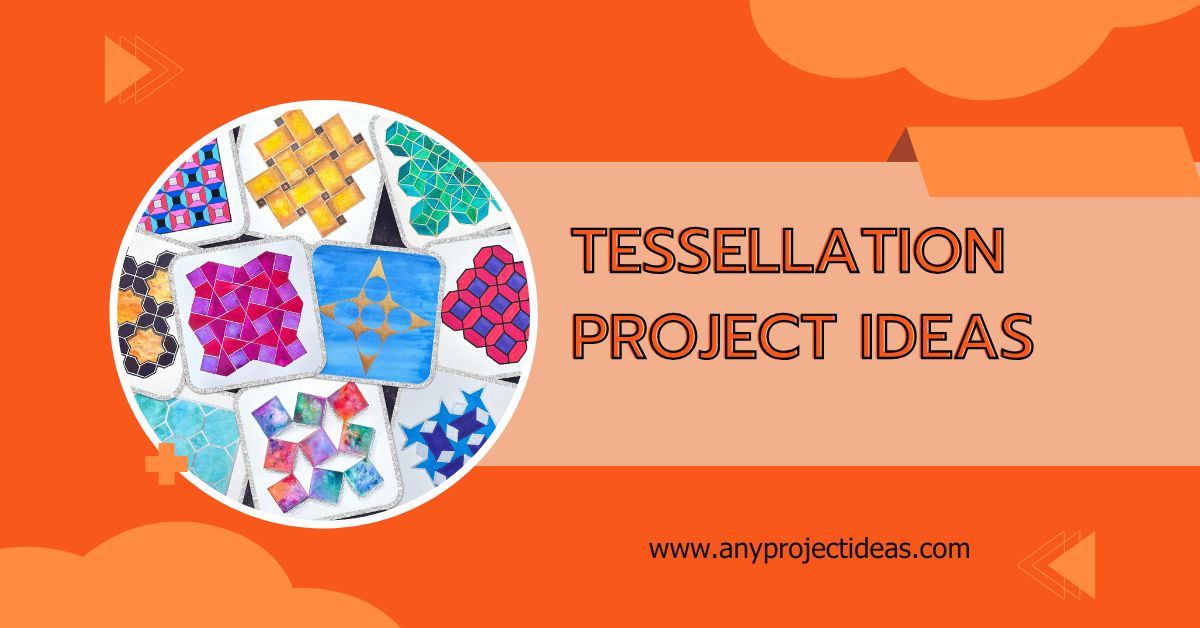
Tessellation projects are one of those rare school assignments where math meets art—and surprisingly, both sides enjoy the collaboration. A well-made tessellation doesn’t just fill space neatly; it tells a visual story using repetition, symmetry, and precision.
If you’re searching for tessellation project ideas, this guide goes beyond basic shapes. You’ll learn what makes a strong tessellation, how to design one effectively, and explore 30+ creative ideas you can actually execute without frustration.
What Is a Tessellation and Why It Matters?
A tessellation is a pattern made of shapes that fit together perfectly without gaps or overlaps. Think of honeycombs, tiled floors, or certain artworks—they all rely on this principle.
Mathematically, tessellations help students understand:
- Geometry and spatial reasoning
- Symmetry, translation, rotation, and reflection
- Pattern recognition and logical thinking
In fact, visual math techniques like tessellations can improve problem-solving accuracy by nearly 30% in middle school learners, according to classroom-based studies on spatial learning.
You May Also Like: Collage Ideas for School Project
30+ Tessellation Project Ideas for Students
Below are 30+ creative tessellation project ideas, each explained in exactly 20 words so you can quickly understand and choose what suits your project best.
Basic Shape-Based Ideas
- Square Grid Pattern – Create a repeating square tessellation using colored patterns to demonstrate symmetry, alignment, and consistent spacing across the entire design surface clearly.
- Triangle Tessellation – Use equilateral triangles arranged systematically to form a repeating pattern, highlighting geometric precision and symmetry across the entire visual layout.
- Hexagon Honeycomb – Design a honeycomb-inspired tessellation using hexagons, demonstrating how nature uses efficient patterns to cover space without leaving gaps anywhere.
- Rectangle Brick Style – Build a brick-like tessellation using rectangles, offsetting rows to create a visually appealing and structurally balanced repeating pattern design.
- Diamond Pattern Layout – Arrange diamond shapes carefully to create a seamless tessellation that emphasizes angles, symmetry, and repeating geometric balance throughout the artwork.
Nature-Inspired Tessellations
- Fish Pattern Tessellation – Transform a simple shape into repeating fish figures, creating a flowing underwater scene that connects art with mathematical precision beautifully.
- Bird Shape Pattern – Design interlocking bird silhouettes forming a tessellation, showcasing creativity while maintaining consistent spacing and alignment across the entire project surface.
- Leaf Tessellation Design – Use leaf-shaped patterns arranged in repetition to represent nature while demonstrating how organic shapes can still form perfect tessellations.
- Butterfly Pattern Art – Create symmetrical butterfly shapes that repeat seamlessly, highlighting reflection and rotation concepts while maintaining a visually engaging and colorful design.
- Flower Petal Pattern – Arrange petal shapes into a repeating tessellation, combining artistic beauty with geometric structure for a balanced and visually appealing project result.
Animal-Based Creative Ideas
- Lizard Tessellation – Design interlocking lizard shapes inspired by famous tessellation art, ensuring each figure connects perfectly without leaving any empty spaces anywhere.
- Turtle Pattern Design – Create repeating turtle shapes forming a tessellation, focusing on shell patterns to enhance visual appeal while maintaining structural consistency.
- Cat Silhouette Tessellation – Use cat shapes arranged in alternating directions to form a seamless pattern that highlights creativity and geometric arrangement effectively.
- Dog Shape Pattern – Develop a tessellation using simplified dog outlines, ensuring each figure fits together smoothly while maintaining recognizable animal features clearly.
- Elephant Pattern Layout – Arrange elephant silhouettes into a repeating tessellation, focusing on trunk and body shapes to achieve seamless interlocking across the design.
Abstract and Artistic Concepts
- Geometric Color Blocks – Combine multiple shapes and colors into a tessellation, focusing on contrast and repetition to create a visually striking and modern design.
- Optical Illusion Pattern – Design a tessellation that creates a 3D illusion, using shading and perspective to make the pattern appear dynamic and engaging visually.
- Spiral Tessellation Art – Incorporate spiral elements into repeating shapes, creating a unique pattern that blends geometry with artistic creativity in an interesting way.
- Mosaic Style Pattern – Use small repeated shapes like tiles to create a larger image, combining tessellation principles with traditional mosaic art techniques.
- Black and White Contrast – Create a high-contrast tessellation using only black and white, emphasizing shape structure and pattern clarity without relying on color variations.
Advanced and Unique Ideas
- 3D Cube Tessellation – Design a pattern that forms cube illusions using rhombus shapes, creating depth and dimension within a flat tessellated surface effectively.
- Escher-Inspired Design – Create a tessellation inspired by famous mathematical art, focusing on transforming shapes into recognizable figures while maintaining perfect repetition.
- Cultural Pattern Fusion – Combine traditional patterns from different cultures into a tessellation, highlighting diversity while maintaining geometric consistency and visual harmony.
- Space-Themed Tessellation – Use shapes like stars, rockets, or planets arranged in a repeating pattern, combining creativity with mathematical precision in design.
- Alphabet Tessellation – Design repeating letter shapes that fit together seamlessly, forming a tessellation while also creating meaningful words or visual messages.
Practical and Everyday Concepts
- Puzzle Piece Tessellation – Create interlocking puzzle shapes forming a seamless pattern, symbolizing connection and unity while demonstrating tessellation principles clearly.
- Tile Floor Design – Design a realistic floor tile pattern using tessellation concepts, focusing on symmetry, repetition, and aesthetic appeal for real-world application.
- Fabric Print Pattern – Develop a tessellation suitable for clothing or fabric design, emphasizing repeating motifs and balanced spacing for practical usability.
- Logo-Based Pattern – Use a simple logo shape repeated across the surface, creating a tessellation that demonstrates branding concepts combined with geometry.
- Food Shape Tessellation – Arrange shapes like fruits or snacks into a repeating pattern, making the project fun while still maintaining structural accuracy.
Extra Creative Concepts
- Cartoon Character Pattern – Simplify cartoon characters into basic shapes and repeat them to form a tessellation while keeping the design playful and engaging.
- Emotion-Based Shapes – Create shapes representing emotions and arrange them into a tessellation, combining abstract thinking with structured geometric repetition effectively.
- Time-Themed Pattern – Use clock or time-related shapes repeated across the surface, representing continuity and flow through tessellation design creatively.
How to Create a Perfect Tessellation Project?
Start with a Simple Base Shape
Beginners often overcomplicate things. Start with squares, triangles, or hexagons. These naturally tessellate and reduce errors.
Use Transformations Smartly
Tessellations rely on:
- Translation (sliding shapes)
- Rotation (turning shapes)
- Reflection (mirroring shapes)
Combining these creates more complex and interesting designs.
Keep Your Design Clean
Clarity matters more than complexity. A neat, well-aligned pattern often scores higher than a messy creative attempt.
Add Color Strategically
Use color to highlight repetition. Avoid random coloring—patterns should feel intentional.
Common Mistakes Students Should Avoid
Many projects lose marks due to avoidable issues:
- Gaps or overlaps in the pattern
- Poor alignment of shapes
- Overcomplicated designs without planning
- Lack of explanation or labeling
A simple, well-executed tessellation beats a complex but messy one every time.
Don’t Skip: When Should You Update Your Vehicle Registration Certificate?
Final Thoughts
Tessellation projects are more than just math assignments—they’re a chance to explore creativity within structure. The best designs feel effortless, even though they’re carefully planned.
With these tessellation project ideas, you have a strong starting point whether you prefer geometric precision, artistic creativity, or a mix of both. Choose an idea that matches your skill level, focus on clean execution, and let your design speak for itself.
Frequently Asked Questions
What is a tessellation project in mathematics?
A tessellation project involves creating repeating shapes that fit together perfectly without gaps or overlaps, helping students explore geometry, symmetry, and patterns.
What are the best tessellation project ideas for students?
Popular tessellation project ideas include honeycomb patterns, animal-shaped tessellations, fish designs, geometric color blocks, puzzle pieces, and Escher-inspired artwork.
How do you create a successful tessellation project?
Start with simple shapes, use transformations like rotation and reflection, maintain accurate alignment, and apply colors strategically for a neat, appealing design.
Why are tessellation projects important for learning?
Tessellation projects improve spatial reasoning, pattern recognition, geometric understanding, and creative thinking while helping students connect mathematics with art.
What common mistakes should be avoided in tessellation projects?
Avoid gaps, overlaps, poor shape alignment, overly complex designs, and missing explanations. Clear, accurate, and well-organized tessellations usually achieve better results.